If you're planning to install a home elevator in Ghana, you've probably asked one important question: "How much will it cost?"
While it's natural to focus on the price, the better question is "What determines the cost of a home elevator?"
Residential elevators are customised to suit each property, so the final investment depends on several variables. From the size of your home to your preferred design and accessibility needs, each decision plays a role in the overall cost.
By understanding these factors, you can choose an elevator that offers the best balance of functionality, style, and long-term value.
Every Home Is Different
Unlike mass-produced household appliances, a residential elevator is designed around your home's unique layout.
A duplex in East Legon may have completely different installation requirements from a multi-level home in Kumasi or Takoradi. That's why two homes can require different elevator solutions even if they appear similar.
A professional assessment helps identify the most suitable option while providing an accurate quotation.
1. The Number of Floors You Want to Connect
One of the first things installers consider is how many levels the elevator will serve.
A lift travelling between two floors will usually require fewer components than one designed for three or more levels.
The travel distance influences:
- Installation planning
- Equipment configuration
- Control systems
- Project complexity
If you're constructing a new home, it's worth considering your future needs before finalising the design.
2. The Type of Elevator You Select
Residential elevators are available in different models, each designed for specific requirements.
Your choice may depend on:
- Available installation space
- Number of users
- Passenger capacity
- Accessibility requirements
- Design preferences
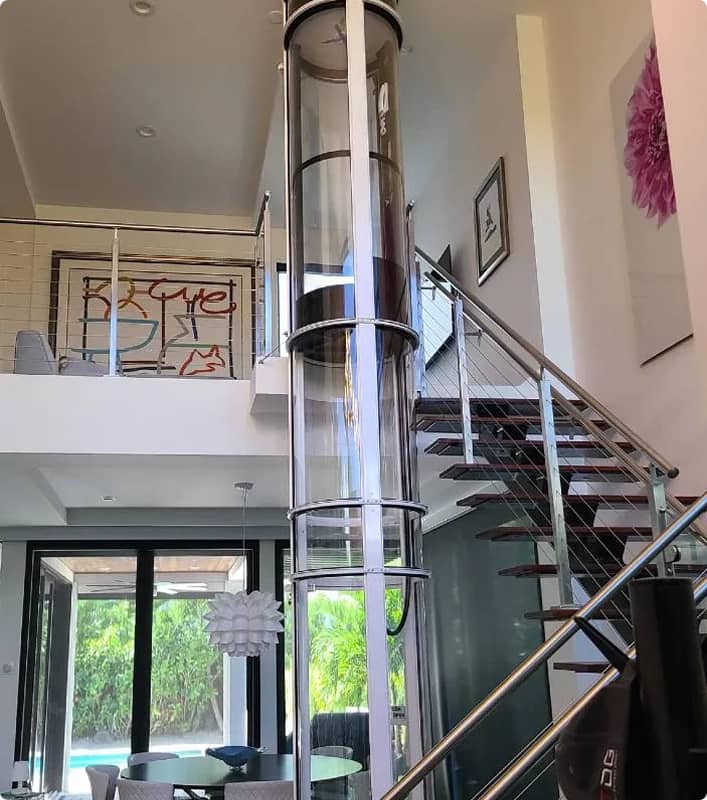
For example, homeowners looking for a premium aesthetic may prefer a panoramic glass elevator, while families supporting elderly relatives may prioritise a spacious, wheelchair-accessible model.
Choosing the right system ensures better performance and long-term satisfaction.
3. Your Home's Layout
The location where the elevator will be installed has a significant impact on the project.
During a site assessment, professionals evaluate:
- Available floor area
- Ceiling height
- Structural conditions
- Electrical access
- Ease of installation
Modern home elevators are designed to fit into many types of residential properties, often requiring less construction work than traditional elevator systems.
This flexibility makes them suitable for both new builds and existing homes.
4. Personalised Design Choices
Today's homeowners want an elevator that blends naturally with their interior décor.
Many residential elevators offer customisation options such as:
- Standard finishes
- Metallic colours
- Textured surfaces
- Hydrographic designs
- Panoramic transparent cabins
- Decorative lighting
- Premium flooring
- Multiple door configurations
These finishing touches create a personalised appearance while complementing the architectural style of the home.
5. Accessibility Requirements
If the elevator will be used by elderly family members or individuals with mobility challenges, accessibility becomes an important consideration.
Features that may influence the overall investment include:
- Larger cabin sizes
- Wheelchair compatibility
- Wider door openings
- Lower control panels
- Handrails
- Smooth entry and exit
These additions improve comfort, independence, and safety for users of all ages.
6. Built-In Safety Features
Modern residential elevators include advanced technologies designed to protect passengers during everyday use.
Depending on the model, safety features may include:
- Automatic emergency descent
- Backup battery systems
- Emergency lighting
- Cabin ventilation
- Door safety locks
- Alarm systems
- Child safety controls
Investing in these features provides confidence and peace of mind, especially for families with young children or elderly relatives.
7. Installation Requirements
No two installation projects are exactly alike.
Factors such as home design, structural conditions, and electrical preparation can affect the amount of work required.
Professional installers assess these conditions before installation begins to ensure the project is completed safely and efficiently.
Think Beyond the Initial Cost
When evaluating a home elevator, it's important to consider the long-term value rather than focusing only on the purchase price.
A residential elevator can provide:
- Safer movement between floors
- Greater independence for elderly family members
- Improved convenience
- Enhanced property appeal
- Long-term accessibility for future generations
For many homeowners, these benefits outweigh the initial investment.
Frequently Asked Questions
Is there a fixed price for a home elevator in Ghana?
No. Residential elevator pricing depends on the number of floors, model selected, installation requirements, and customisation options.
Does a luxury finish increase the cost?
Yes. Premium finishes, specialised lighting, custom colours, and panoramic cabins may affect the final investment.
Can I install an elevator in an existing home?
Yes. Many modern home elevators are specifically designed for installation in existing residential properties with minimal structural modifications.
How do I know which model is right for my home?
A professional home assessment helps determine the best elevator based on your home's layout, accessibility needs, and design preferences.
Final Thoughts
A home elevator is more than an upgrade—it's an investment in comfort, accessibility, and the future of your home. While factors such as the number of floors, elevator model, installation location, and customisation influence the overall cost, choosing the right solution ensures lasting value for you and your family.
The best way to understand the true cost of a residential elevator is through a professional assessment that considers your home's unique requirements.
Ready to Get Started?
Whether you're building a new home or upgrading an existing one, PE Lifts is here to help you find the perfect residential elevator solution.
Book a free home assessment today, and our experts will evaluate your property, discuss your needs, and recommend an elevator that fits your lifestyle, space, and budget. It's the first step toward creating a safer, more accessible, and future-ready home